
Are you trying to get new customers for your startup or seasoned business? Yeah, why won’t you? Customers are the “foundation” of a company. Without them, no business can survive.
They are the ones who buy our products, avail our services, and opt for our solutions. If they are not present, no sale, no revenue, no profit, no growth. Result? Business shut!
But don’t worry! We are here for you!
We understand that either you’re struggling to acquire new customers, and you ended up here.
Or you might want to know what customer acquisition is, how it works, what strategies are best for acquiring customers, and more. So that you can utilize it in the future if necessary.
Regardless of your aim, if you want to get the basic to advanced details on customer acquisition. This guide is what you need.
Without further ado, let’s start!
What is Customer Acquisition?
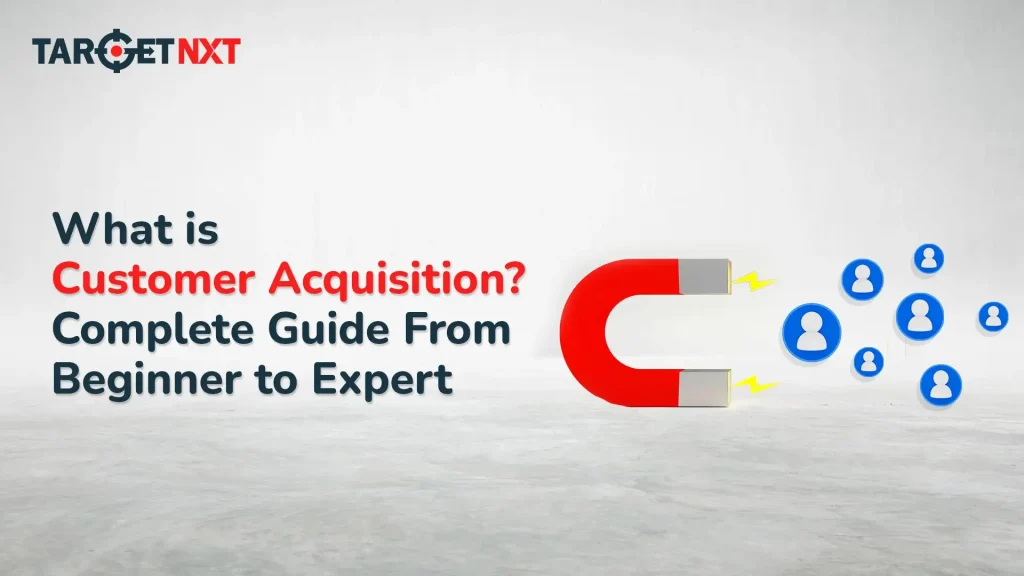
Customer acquisition is the process of acquiring new customers for the business. It basically means converting the leads of your business into long-term paying customers.
By whom & how?
By the marketing team, the sales team, customer support service team. These teams leverage different strategies and promotion approaches to successfully convert and get the company valuable and loyal customers.
Therefore, customer acquisition involves a collaborative effort from several key teams. If team members work strategically and mindfully, there’s a 99% guarantee of getting new customers.
You must know, every new thing you do for your business comes with a cost, be it new customers, new innovations, new products, and so on!
So, when it comes to bringing in new customers for the business, the cost incurred in the process is termed as “customer acquisition costs”.
What are Customer Acquisition Costs Exactly?
As mentioned, customer acquisition costs are the cost incurred in getting every new customer to your business.
So, suppose the cost of marketing was around $2000, and you acquired 100 new customers. Therefore, the CAC would be 20 per customer.
Here comes the formula,CAC = Total Cost in Marketing/Number of Customers Acquired
With the CAC comes customer lifetime value, which is a prediction of how much a customer will contribute to the organization over their lifespan.
Both the metrics, Customer Acquisition Cost(CAC) and Customer Lifetime Value(CLV), are interrelated. It is used to gauge the financial health of a business, especially in marketing and sales.
A healthy business strives for a high CLV to CAC ratio, meaning it earns more from a customer over their lifetime than it costs to acquire them.
Now that you know the basics of “Customer Acquisition”, let’s dive in!
The Working of Customer Acquisition—Funnel!
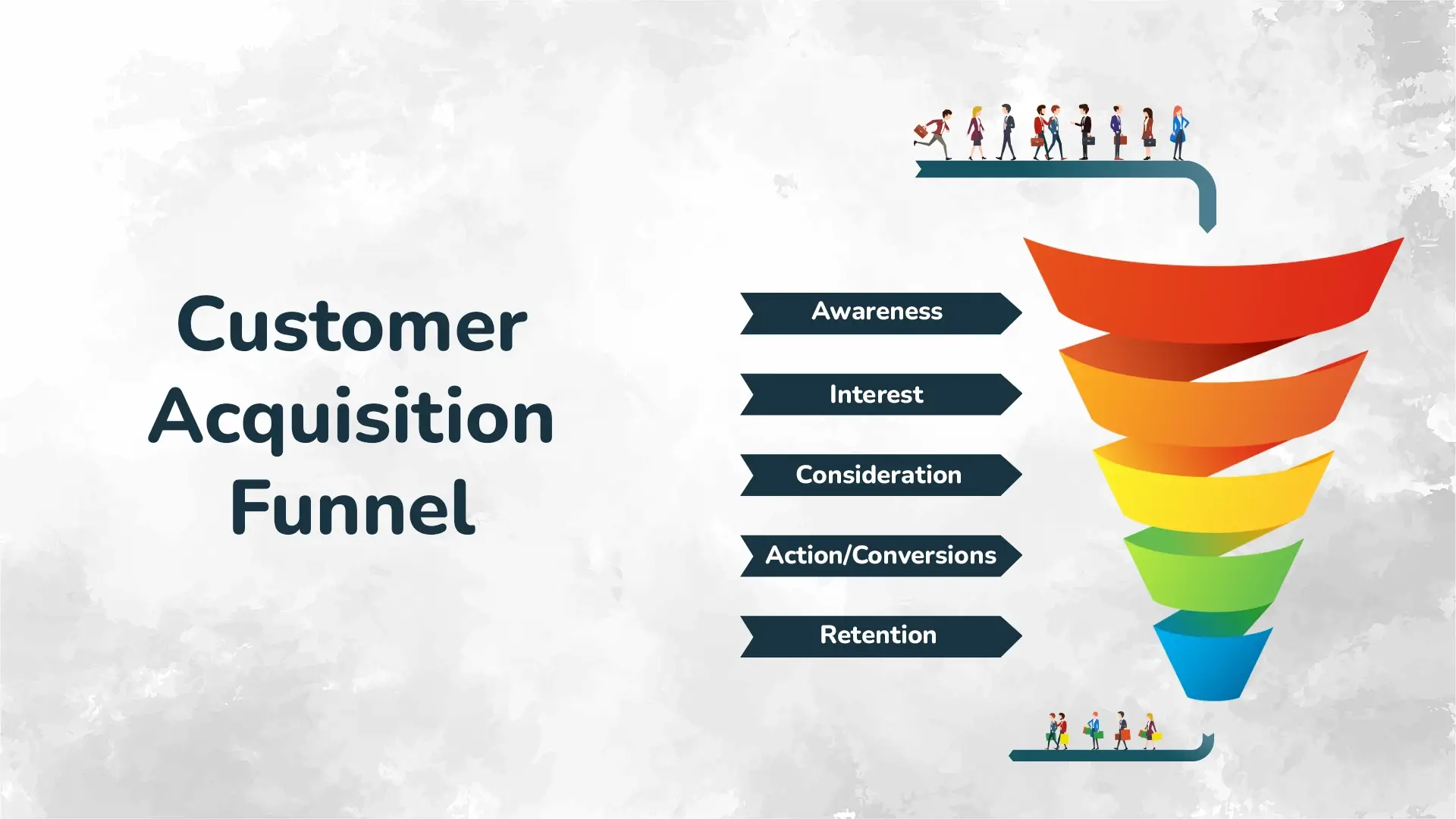
It’s not as simple as it sounds. You might be thinking, “Oh, just show your product or service and get customers by becoming a glib talker”.
Gone are those days; now you need to stand out from your competitors. This means your products should be the best in terms of quality, quantity, affordability, etc.
Moreover, your business shouldn’t just be confined to promotion, it should offer “value” to the users.
A Tip: Remember, first, “always educate your users” before pitching and converting!
Under the customer acquisition funnel falls the marketing and sales funnel. Why so? A business only gets customers after the implementation of sales and marketing strategies.
So, to understand how the customer acquisition process works, we need to understand the funnel. Let’s look at the different parts of the funnel.
1. Awareness
This is the first stage where businesses “educate the users,” tell them what value they’ll get instead of direct promotion. Moreover, the business makes the potential prospects aware of their brand, products, and services.
So, how to do that? You must ensure that enough information is provided across the different platforms, such as social media, search engines, and more.
2. Interest
Piquing the interest of the clients in your brand is imperative. Once aware, your goal should be to pique their interest. This is possible only if you offer free samples, trials, and some informative content highlighting the pros of your offerings.
You must make sure to deliver a good customer experience by providing the “exact value” they need.
3. Consideration
At this stage, prospects are weighing your products/services against alternatives. You can make your business influence the strongest by providing product demos, comparison charts, or case studies.
4. Action/Conversions
The last stage is where the customers take action and make the purchase. The goal is to move as many prospects as possible through the funnel and convert them into long-term paying customers.
It means achieving higher customer acquisition. At this stage, finally, your customer acquisition process ends, and you have a huge base of customers for your business.
5. Retention
This stage is also imperative as it focuses on establishing loyalty and encouraging repeat business. Therefore, post-purchase also you must be with your customer to solve any queries, challenges, and needs. This ensures your business with a loyal customer, who’ll choose your business again and again over others.
Now that you have the overall view of the customer acquisition process, let’s understand different strategies for successfully acquiring new customers.
Highlighting The Expertly Tested Customer Acquisition Strategies
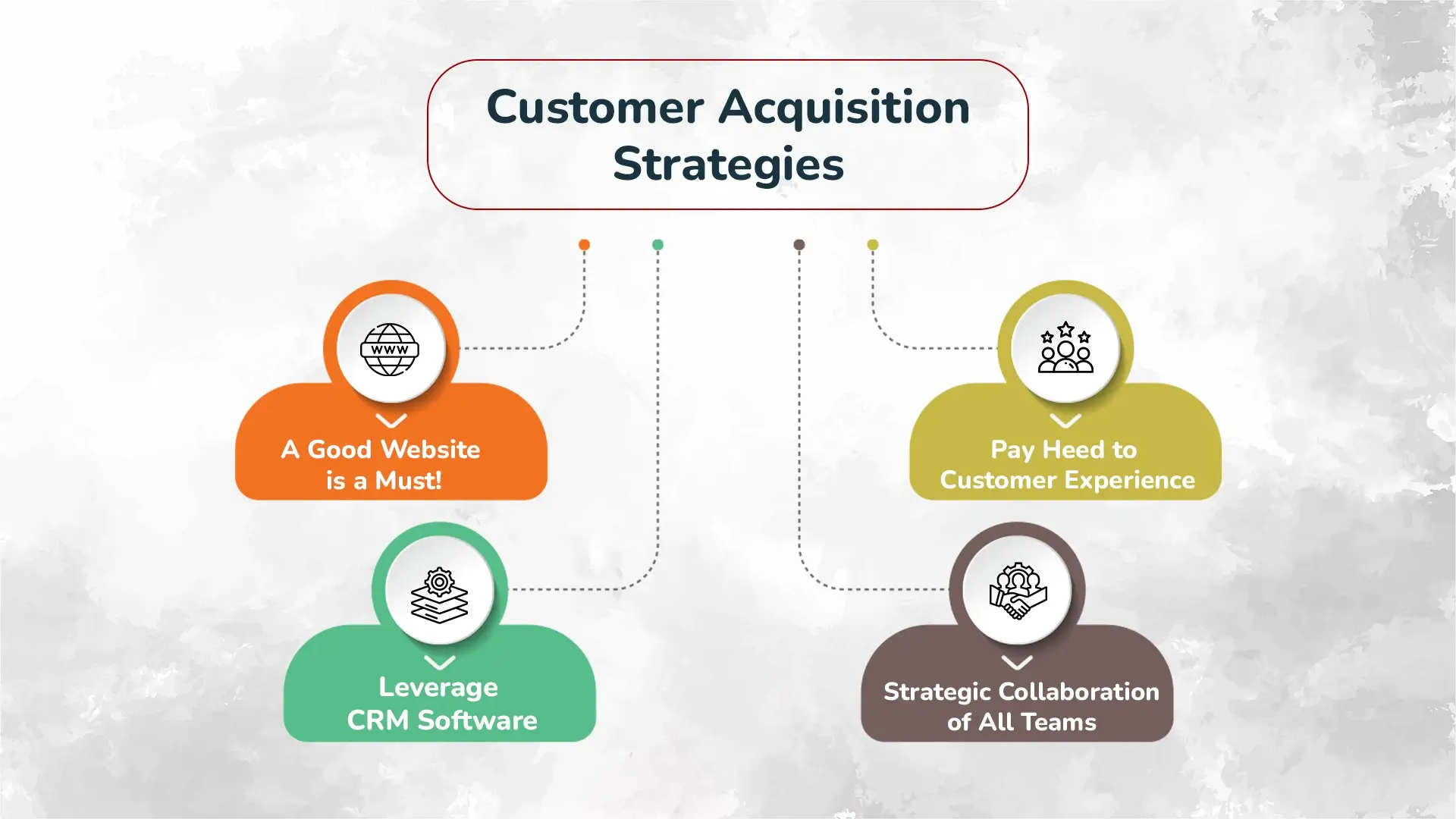
Customer acquisition strategies refer to numerous approaches businesses utilize to attract, acquire, and retain new customers for their business.
1. A Good Website is a Must!
Every business must ensure that it has a good website. That means:
- Well-designed and Functional. Your site must showcase “what your company does”, what products/services they offer, and more.
- Optimized for Mobile Phones
- Easy to Use.
- Fresh, Informative, Valuable, and Quality Content.
- Readily Accessible Contact and Location.
- Triggering and Precise Calls to Action.
- Optimized for Search and the Social Web.
- Integration of Chatbots for 24/7 customer support assistance.
A good website incorporating all key points mentioned above is a crucial customer acquisition strategy, helping businesses easily acquire new, loyal customers, increase revenue, and help expand market reach.
From Personal Experience: These features in your website will help you go a long way and significantly increase the number of customers your business gains.
2. Leverage CRM Software
See how CRM acts as the backbone for customer acquisition:
It is a highly effective tool used as a core component of a customer acquisition strategy. CRM Software helps in:
- Centralizing Customer Data (Gathering & Storing customer-related information in a single hub, offering a 360-degree view of each customer. Such as customer needs, preferences, purchase patterns, and more.
- Improved Lead Management(By tracking two things: lead interactions and movement through sales funnel, it help businesses ensure the sales team focuses on the high-intent prospects)
- Measuring Customer Acquisition Cost(CRM software tracks and measure CAC, helping in provide valuable insights into how to make customer acquisition strategies a bit cost-effective)
- Integration with Marketing Automation Tools(CRM allows seamless integration with marketing automation tools helping businesses automate their marketing campaigns and even personalize communication)
Therefore, the above points state that businesses can improve their customer acquisition process and efforts and establish long-term connections with their target audience.
3. Pay Heed to Customer Experience
As per recent statistics, after a good customer experience, 62 percent of the B2B customers purchased more. To the contrary, after a bad customer experience, 66 percent of B2B customers stopped buying. You must ensure that your interaction with the customer leaves them with a positive impression
If that’s the case, you can establish a deeper and trustworthy connection with your customers, ensuring they are more likely to be loyal and paying customers. They’ll also recommend your business.
Moreover, there are various ways of building a good customer experience, including:
Personalized communication(Tailor messages as per customers’ needs, preferences, pain points)
Omnichannel experience(Consistent and Cohesive Experience Across All Channels)
You must listen to the feedback given by your customers and act on it
AI-powered support, such as Chatbots, helps in solving customer queries quickly
And more!
Therefore, customer experience directly influences purchase decisions, making it a major part of the customer acquisition strategy.
4. Strategic Collaboration of All Teams—Marketing, Sales, Lead Gen, Customer Support & More!
A strategic collaboration among teams is an effective customer acquisition strategy. This means aligning efforts from different departments like marketing, sales, lead generation, and customer service to create a seamless customer experience and journey, driving higher conversions.
By working collaboratively and collectively, teams can avoid all sorts of communication gaps, allowing them all to be on the same page. This helps to easily achieve a common objective of attracting and converting potential customers.
If the team works towards “a common goal,” i.e., acquiring customers, the overall customer acquisition process can surely be effective and successful.
Tried and tested strategies are here; now you just need to know the different platforms!
To know various effective customer acquisition channels, keep reading…
What are The Different Customer Acquisition Channels?
There are multiple platforms where you can implement the above strategies, create a seamless customer journey, and get more and more customers to your business.
The customer acquisition channels include:
- Company Website
- Social Media Platform
- Products
- Services
- Paid ads
- Resources(blogs, case studies, infographics, etc)
- Marketing Campaigns
- And more!
If you implement the strategy mentioned above effectively on these channels, although make sure to align with your business vision, you’ll surely achieve guaranteed success.
Wrapping Up
“Customers are the foundation behind every business success”. It’s very important to have a huge base of “long-term, loyal, and paying customers. For that, you just need the right steps and process necessary for customer acquisition. And by now, you must have already understood that.
So, start aiming at how to get a huge number of prospects in your customer acquisition funnel and transform into long-term paying customers.
Moreover, you must consistently monitor and optimize the customer acquisition process to get hands-on good customers at a minimal customer acquisition cost(CAC).