
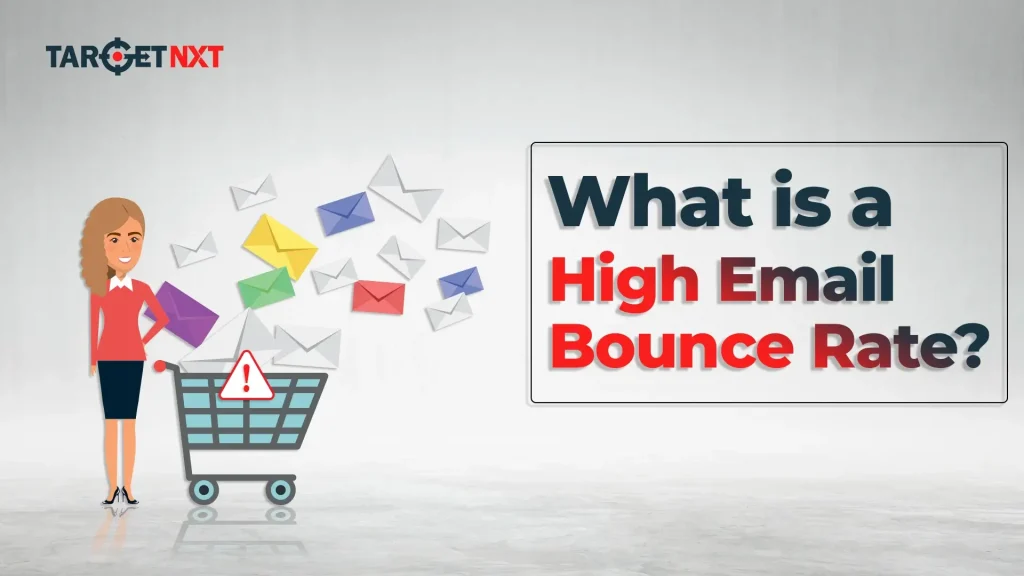
If you send an email campaign, one of the last things you might want to see is a high bounce rate. But what does it mean and why should you care? Let’s break it down in a way that is easy to understand and actionable.
Understanding Bounce Rates
First, to understand the meaning of a high bounce rate, let’s define “bounce rate”. In the context of email marketing, a bounce is an event in which an email cannot be delivered to the recipient’s inbox. This occurs for several reasons, and bounces are categorized into two major types:
a. Soft Bounce
This bounce is usually caused by a short-term problem that prevents the email from being delivered. Common causes include a full inbox, a server problem, or an email size. Soft bounces are not necessarily the end of the world; sometimes, these emails will still be delivered after the issue is resolved.
b. Hard Bounce
A harder bounce would be a severe indication. This is usually something wrong with a permanent nature whereby an e-mail cannot arrive, or it has an invalid email address with a nonexistent domain name. Hard bounces require one to act immediately because it indicates an essential problem of concern in one’s email list.
What Constitutes a High Bounce Rate?
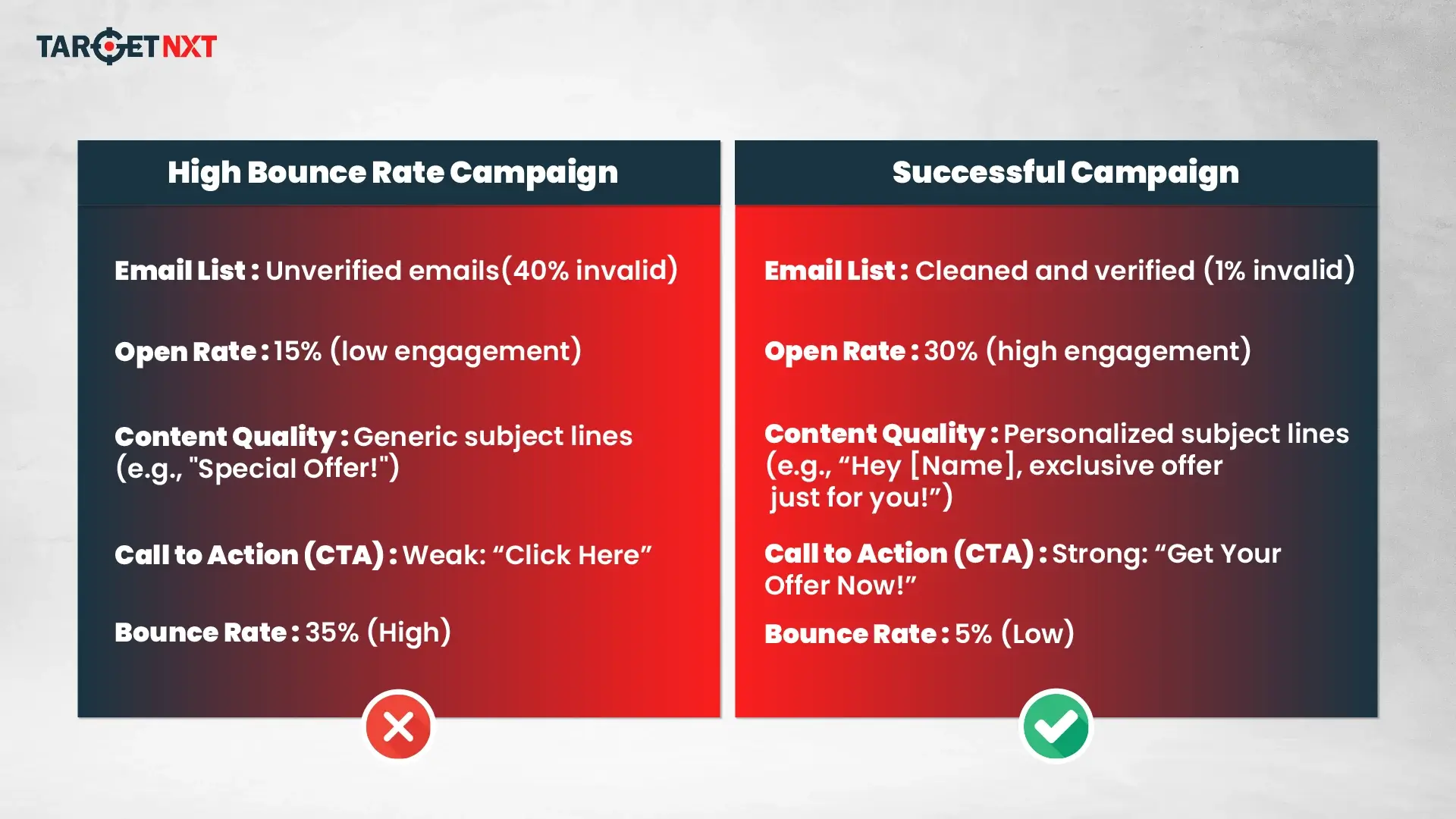
Generally speaking, a high bounce rate means that it is over 2% of all emails you have sent. However, what may be tolerated can depend on the type of business, your industry, your audience, and your type of campaign. While B2B might take it a little differently compared to a retail-focused campaign, if you see that the bounce rate is moving over this limit, it simply means that something is amiss.
Why High Bounce Rates Matter
For any email marketer, understanding the implications of a high bounce rate is a matter of utmost importance. Here are a few reasons why you should take this metric seriously:
1. Reputation Damage
Email service providers closely monitor bounce rates as part of their algorithms to determine sender reputation. A consistently high bounce rate can damage your reputation, making it increasingly difficult for your emails to land in recipients’ inboxes.
2. Wasted Resources
You waste precious time and money sending emails to invalid addresses. Every bounced email means an opportunity wasted in contacting potential customers. Spending resources on campaigns that do not bring returns may mean a time for rethinking one’s strategies.
3. Impact on Deliverability
A high bounce rate that persists for a longer period may lead to a blacklisted domain. Later, your emails get marked as spam, and hence, you are limited in accessing your future audience.
4. Low Engagement Rates
Similarly, high rates of bouncing can be associated with low engagement. If bouncing happens frequently, then probably your potential audience will not open your email, and eventually, less interaction and rapport will result.
How to Minimize Bounce Rates
Now that we established why high bounce rates are a problem, how can you keep them in check? Here are some actionable tips to help you optimize your email campaigns:
a. Clean Out Your Lists
Regularly cleaning out your lists may be called list hygiene, but it’s the only name of the game if you want to keep an active list. Remove invalid e-mail addresses and inactive subscribers to maintain a healthy list. This practice not only improves deliverability but also enhances engagement with your audience.
b. Use Double Opt-In
The quality of your email list will be improved with a double opt-in process. Here, the users confirm their email addresses after signing up. Thus, you will collect valid addresses from the very start.
c. Monitor Engagement
Monitor how your people are engaging with your emails. A low engagement rate may mean that your content is not resonating or that your list needs cleaning up. Use engagement metrics to refine your targeting and messaging strategy.
d. Segmenting Your Audience
This will let the messages be tailored down to specific groups in your target audience, hence higher engagement and lower bounce rates are possible. Targeted content in your e-mails is sure to reach the opening page more likely.
e. Use Email Verification Tools
You may also buy email verification services to send you a warning signal regarding unwanted addresses before your campaign release. These tools can catch typos and inactive accounts that will keep your list clean.
f. Test Your E-mails Before Sending
Send your e-mails through some testing tools to ensure issues of deliverability are settled before launching your campaign. This can simulate how your e-mail will be received, giving you a chance to see if some problems need to be adjusted before the campaign is launched.
Conclusion
In the fast-paced world of email marketing, understanding your bounce rate is crucial for success. A high bounce rate can hinder your ability to connect with your audience, waste resources, and damage your sender’s reputation. However, with proactive measures, you can keep your email campaigns effective and your audience engaged.
So, how’s your bounce rate looking? Better yet, what do you do if you’re not sure? Time to dig into that analytics report and make some tweaks. Taking these necessary measures to maintain manageable bounce rates can help enhance your overall email performance, as well as help you stay connected to your audience. Happy emailing!