
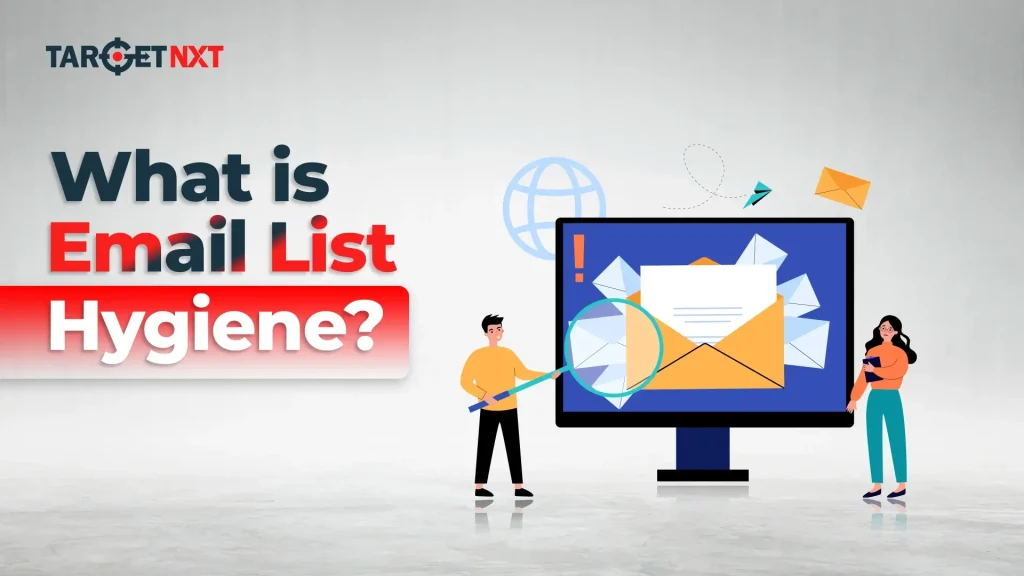
Email List Hygiene refers to keeping inactive prospects away from the list and making a clean list full of active prospects. In simple words, it says to clean and scrub your email list regularly so that your messages reach the right inbox, which means your prospects are more engaged with your message. Effective handling of healthy lists of emails is pivotal in order to maximize the efficiency of a campaign and be effective for positive interactions with your recipient’s box.
Check out TargetNXT, request their free samples, and see the email list pop up with zero duplication and 100% accuracy.
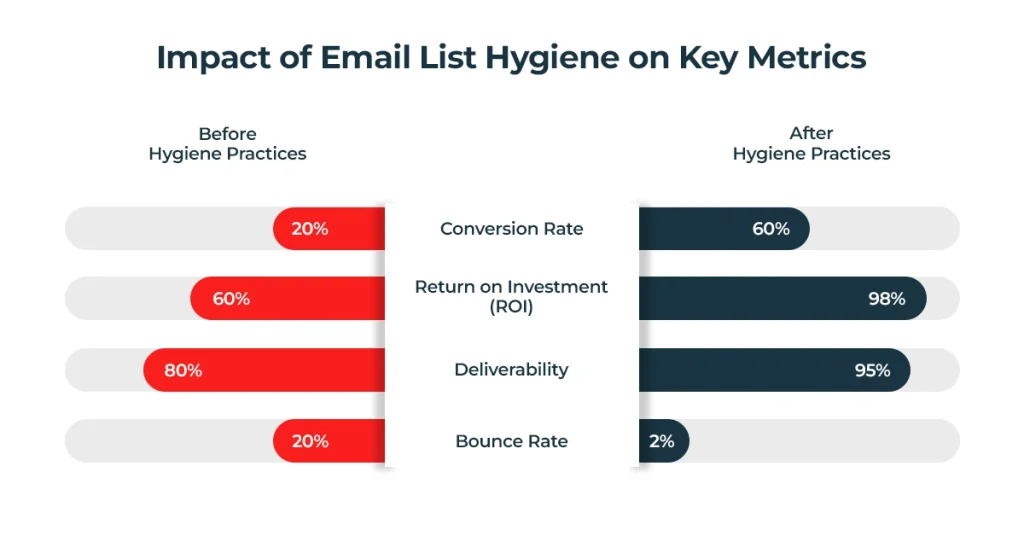
Advantages of Email List Hygiene
1. Better Deliverability
Cleansing and scrubbing your email list reduces hard bounces and spam marking, thereby increasing deliverability.
2. Enhancing Open Rates
Maintaining hygiene on your email list generally means you have engaged, interested prospects, and these usually translate to higher open and click-through rates.
3. Cost Efficiency
Maintaining proper email hygiene helps you to delete inactive or invalid contacts, thus letting you put your resources in the right direction, saving costs effectively.
4. Better Relations with Clients
A well-maintained email list, makes you focus on engaged prospects, thereby enabling you to align your marketing campaign in sync with their needs and preferences, thus carrying healthier relationships.
5. Spam Probability
Well-organized email lists also reduce the possibilities of spam flagging, which severely affects your business.
6. Conversion Rate
Marketing to an audience with a healthy email list increases conversion rates, whether to sales, sign-ups, and more.
7. All Compliance
Healthy email lists and regular updating ensure that you are adhering to all such rules such as GDPR, CAN-SPAM, DNS, etc, hence less possibility of being faced with legal risk.
8. Effective Segmentation Opportunities
With a clean email list, effective segmentation takes place, allowing you to send very specific messages to specific groups of people based on their expressed interests and behavior. If you want to dig deeper into how you can leverage healthy email data for better marketing strategies, check out our blog, 7 Expert Tips to Level-Up Data-Driven Marketing.
Steps Involved in Maintaining Email List Hygiene
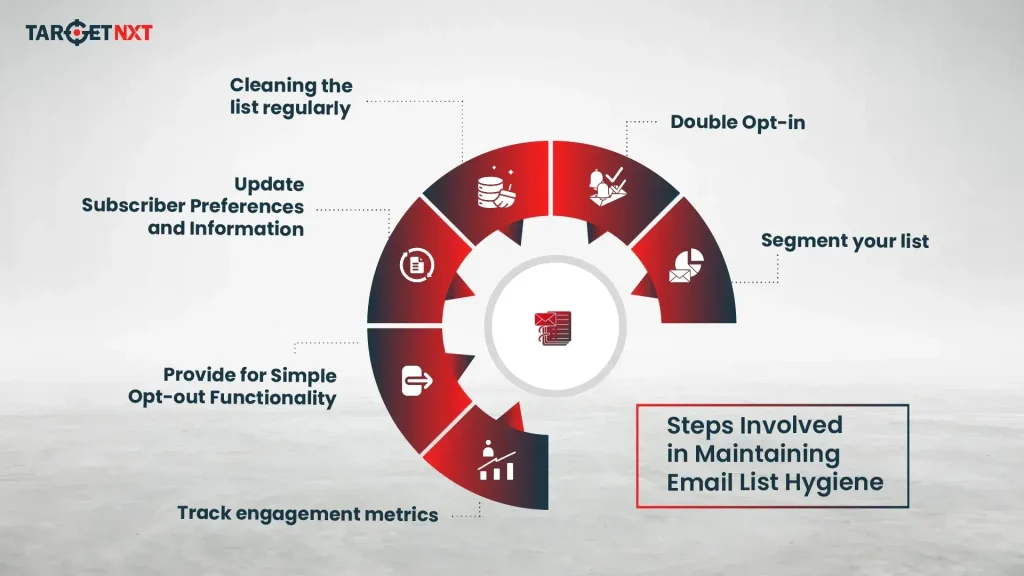
1. Cleaning the List Regularly
Removes inactive prospects-for instance, those who have not opened emails in the last 6-12 months. Deleting hard bounces immediately post-campaign.
2. Double Opt-in
Ensure that the prospects can confirm email addresses to naturally reduce fake sign-ups as well as spam traps.
3. Segment Your List
Segment prospects based on behavior, preference, and demographics to send targeted campaigns.
4. Track Engagement Metrics
The monitor opens, clicks, and bounces to catch inactive prospects.
5. Provide for Simple Opt-out Functionality
Enable prospects to unsubscribe easily so that your brand does not land on spam complaints.
6. Update Subscriber Preferences and Information
Make it easy for prospects to update their preferences and information quite often.
7. Conduct Periodical Audits
Carry out regular audits of the email list to ascertain the accuracy and relevance.
8. Use Email Verification Tools
Implement some email address verification tools at the signup stage and periodically afterward.
Consequences of Poor Email List Hygiene
a. Low Deliverability
The high number of inactive addresses in an email list makes them spam the email servers, which reduces deliverability rates.
b. High Bounce Rate
Though not entirely bad, hard bounces happen when you send emails to invalid addresses, and it makes a bad impression on your sender’s reputation and subsequent email broadcasts.
c. Lower Email Response Rates
An email list that is full of clutter usually comprises recipients who have lost interest in the content of your emails. That means your campaign will have low opening and click-through rates with poor email list hygiene.
d. Wasted Resources
Sending emails to unengaged or invalid addresses wastes time and money. Resources spent on email marketing could be better utilized on targeted campaigns.
e. Brand Damage
Poor hygiene of the email list can damage a brand’s reputation. When your emails are marked as spam, then the email further delivers some deliverability challenges.
f. Non-Compliance
Keeping an email list clean also ensures compliance with GDPR and CAN-SPAM regulations. Failure to comply carries legal penalties and fines.
g. Poor Segmentation
Due to the poor quality of the email list, it becomes really difficult to segment the audience and indeed hampers every bit of personalized marketing effort resulting in a decrease in the overall effectiveness of a campaign.
Wrapping Up
Email list hygiene is one of the best practices any organization maintaining good relationship with their audience should adopt. An email list that is clean and correct gives businesses opportunities to improve deliverability rates, and engagement metrics, and also make better relationships between the prospects and businesses. Among the things that would define an emailing campaign on the right track would include updating the list by having it clean up and validate e-mail addresses and delete inactive and invalid contacts.
Ultimately, prioritizing email list hygiene not only protects your sender’s reputation but also ensures that your marketing efforts are effective and yield the best possible results. Investing time and resources into maintaining a healthy email list will pay off in the long run, leading to more successful campaigns and a stronger connection with your audience.