
Understanding Email List
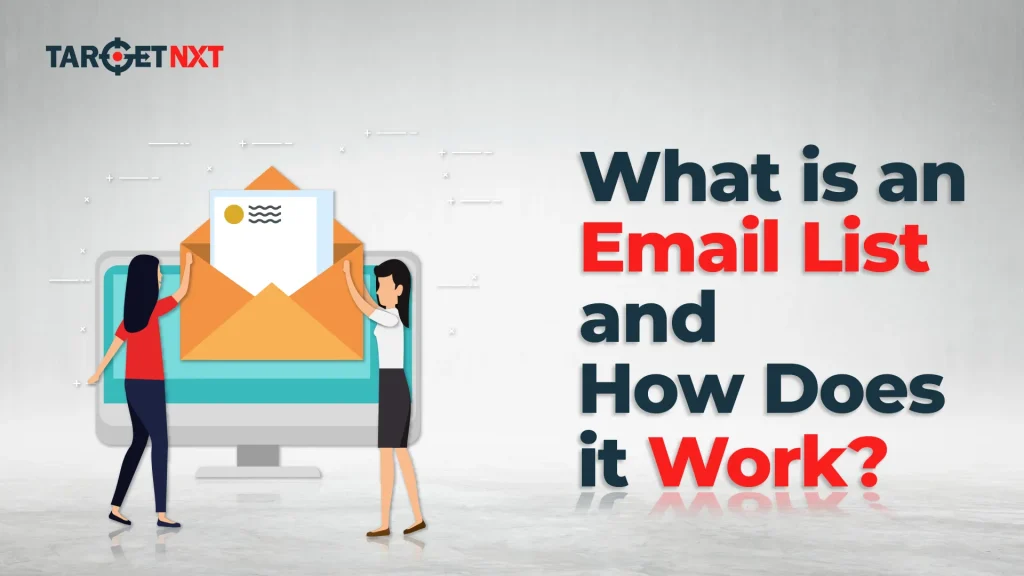
An email list is a compilation of contact details of numerous businesses, key decision-makers, professionals, etc., involved in different sectors. This can enhance your marketing strategies to a level that fosters multi-channel marketing. Further, an email list is more than a compilation of contacts; rather, it works as a powerful marketing machine that drives the marketing effort, fosters customer relationships, and above all, sends your business down the road of success and growth.
How Email Mailing List Works?
Email mailing lists are essential for effective B2B communication. Businesses collect the email addresses of interested subscribers and store those email addresses in a database. This will enable you to organize and segment the audience based on their interests and behaviours, so you may create targeted messaging that resonates with certain groups.
With this organized data, it will be easy to send customized campaigns to your segments. It ensures that your content is relevant and on time hence maximizing engagements and rates of conversions. For more information, reach out to TargetNXT and actualize it.
What are the Different Types of Email Lists?
1. Opt-In Email Lists
This list contains individuals who want to get messages from your business. They have more engagement as they opt in for receiving messages. Moreover, their anti-spamming laws are not violated.
2. Segmented Email Lists
These are sub lists of an email list that are related according to specific criteria like demographics, geographic, interests, and purchase behaviour. Segmentation aids targeted messaging; your messages will have more relevance for your recipient.
3. Transactional Email Lists
Those are contacts who have made a transaction or gone through a particular transaction with your company. They are excellent leads for follow-up communications and upsell opportunities.
4. Cold Email Lists
This is an inactive contact that has been so long without any interaction with communications regarding your company. An engagement and marketing campaign can be applied to ensure that such subscribers regain interest.
5. Lead Nurturing Email Lists
Such lists contain customers who may have been interested in any or all of your products or services, but haven’t bought as yet. Business communications can take these leads through the buying process through relevant and informative content and personalized communication.
How to Build an Email List?
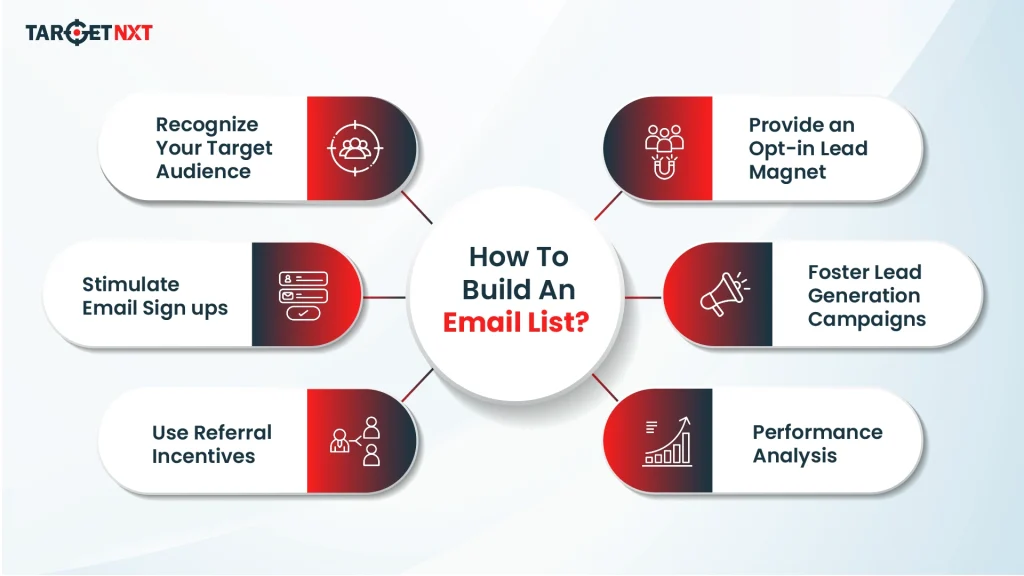
1. Recognize Your Target Audience
Categorize your audience by:
- Age
- Location
- Gender
- Job Title
- Level of Income
- Interests and Pain Points
2. Provide an Opt-in Lead Magnet
Form important resources such as:
- E-books
- Checklists
- Guides
- Free Trials
- Discount Coupons
3. Stimulate Email Sign-ups
Place sign-up forms in:
- Website (homepage, landing pages)
- Social Media (posts, stories, ads)
- Pop-ups and banner
4. Foster Lead Generation Campaigns
Connect your audience through:
- Contests and Giveaways
- Quizzes and Surveys
- Free Consultations
5. Use Referral Incentives
Ask current subscribers to:
- Refer friends and family
- Offer rewards (coupons, exclusive content)
6. Performance Analysis
Key performance indicators include:
- -Open Rates
- Click Rates
- Conversion Rates
- Un subscription Rates
- Leverage insights to future-optimize campaigns
For more detailed strategies and insights, check out our blog on How to Build an Email List for Marketing.
What are The Benefits of an Email List?
- Direct Contact: Email lists permit direct contact with your clients and give you the leverage to send them personal messages, which create relationships and hence customer loyalty.
- Cost-Effective Marketing: With an mailing list you can run email marketing that is cost-effective compared with the other conventional techniques of advertisement; hence, it provides a large reach without much cost to spend.
- Measured Outcome: Email marketing allows businesses to have detailed analytics on the open rates, click-throughs, and conversions, which helps in informed decisions.
- Opportunity for Segmentation: Information presented by email lists allows audience segmentation and talking to different groups about it. It helps engage the reader more and ultimately improve the response rates.
For more insights on effective marketing strategies and building a good connection with customers, visit TargetNXT.
Wrapping Up
An email list is one of the important business assets in terms of its functionality in making marketing campaigns effective and can help to develop meaningful relationships with customers. Using targeted messaging, the mailing list helps businesses reach the target audience in an efficient manner that drives conversions and loyalty. In the end, the payoff would lead to sustainable business growth and success.